Resilience rating systems
The World Bank framework separates resilience of a project from resilience created through a project. That distinction is useful well beyond large infrastructure.
Read the World Bank RRS briefResilient Building Council
Ratings, certifications, material comparisons, and workshops connected to real building decisions.
Use the framework that matches the question, then return to the building.
The World Bank framework separates resilience of a project from resilience created through a project. That distinction is useful well beyond large infrastructure.
Read the World Bank RRS briefCompare Building Biology Institute and Phius paths by the questions they answer, the documentation they require, and the issues they leave to the project team.
Compare wall systems, plasters, insulation, finishes, carbon, toxicity, fire behavior, vapor behavior, repair, and maintenance without reducing the answer to one score.
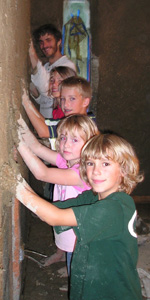
Hands-on learning works best when the material has a real wall, schedule, and owner.
Evaluate soil, prepare mixes, build walls and benches, and connect earthen work to structural elements.
Prepare wood, Faswall, straw bale, or masonry substrates. Mix local materials and practice durable application.
Study lime chemistry, substrate preparation, mixes, additives, staging, curing, and repair.
Work with clay, milk-protein binders, pigments, and botanical oils on plaster, drywall, wood, and masonry.
Future guides can place wall systems, plasters, insulations, and certification paths side by side with clear assumptions and sources.
Source, ingredients, emissions, installation, moisture, fire, repair, cost, and end of life.
Climate, transitions, sequencing, testing, drying, maintenance, failure, and replacement.
Newsletter notes can cover new comparisons, case studies, and project-based learning.